

As students and families prepare to pay for college, the search for scholarships and student loans can make them a target for scammers. Fraudsters often exploit the financial stress surrounding higher education, using fake scholarship offers, deceptive loan programs, and phishing schemes to steal money and personal information. According to the American Bankers Association Foundation, more than $100 million is lost to scholarship scams each year, and more than half of students seeking private loans report being targeted by fraudulent loan offers.
Why Students Are Vulnerable
The cost of higher education continues to rise, and most students rely on some form of financial assistance. In fact, 84% of first-year students receive financial aid, while 66% complete the Free Application for Federal Student Aid (FAFSA). [aba.com]
With so many students applying for aid, scammers see an opportunity. They may pose as scholarship providers, loan companies, or even government agencies to gain access to sensitive information such as Social Security numbers, bank account details, and FAFSA credentials.
Common Scholarship and Student Loan Scams
Be cautious if you encounter any of the following:
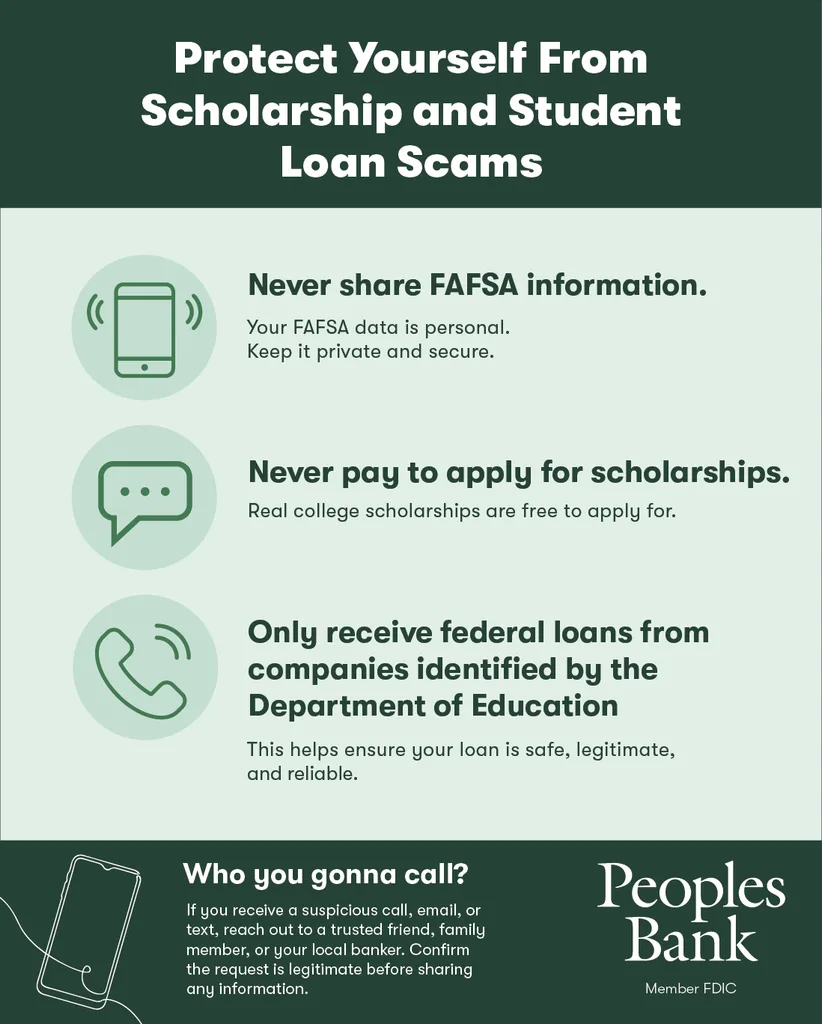
- Scholarship Application Fees: Legitimate scholarship programs do not require an application fee. If a company guarantees a scholarship in exchange for a fee, it is likely a scam.
- Requests for FAFSA Information: Scammers may ask for your FAFSA login credentials or other personal information. Sharing this information can put your financial aid and identity at risk.
- Unsolicited Loan Offers: Fraudulent lenders often contact students directly with offers that seem too good to be true. They may promise guaranteed approval or unusually favorable terms.
- Pressure to Act Quickly: Scammers frequently use urgent language to pressure students into making decisions before verifying an offer’s legitimacy.
How to Protect Yourself
Students and parents can reduce their risk by following a few simple guidelines:
- Apply for federal student aid through official government channels.
- Never pay a fee to apply for a scholarship.
- Do not share FAFSA login credentials or other sensitive personal information.
- Verify that lenders and scholarship providers are legitimate before responding.
- Be cautious of unsolicited emails, phone calls, or text messages regarding financial aid.
- Research organizations thoroughly and look for official websites and contact information.
What to Do If You Suspect a Scam
If you believe you’ve encountered a scholarship or student loan scam, report it immediately. Resources are available through the Federal Trade Commission, the U.S. Department of Education Office of Inspector General, and the Federal Student Aid Information Center. Reporting suspicious activity helps protect other students and families from becoming victims.
Stay Alert and Stay Informed
Paying for college is challenging enough without having to worry about fraud. Taking a few extra moments to verify scholarship opportunities and loan offers can help safeguard your finances and personal information. When in doubt, work with trusted financial institutions and official government resources to ensure you’re making informed decisions about your education funding.
Sources: American Bankers Association Foundation Get Smart About Credit campaign and scholarship/student loan scam awareness materials. [premiercommunity.com], [bankingjou…al.aba.com]