Online payment apps such as Zelle, Venmo, CashApp, and PayPal make it easy to split dinner bills, pay a friend, or send money to family members. Unfortunately, scammers have found ways to exploit that convenience.
One increasingly common scheme is the “accidental payment” scam. At first glance, it seems like an honest mistake. In reality, it can leave unsuspecting consumers paying a scammer with their own money.
How the Scam Works
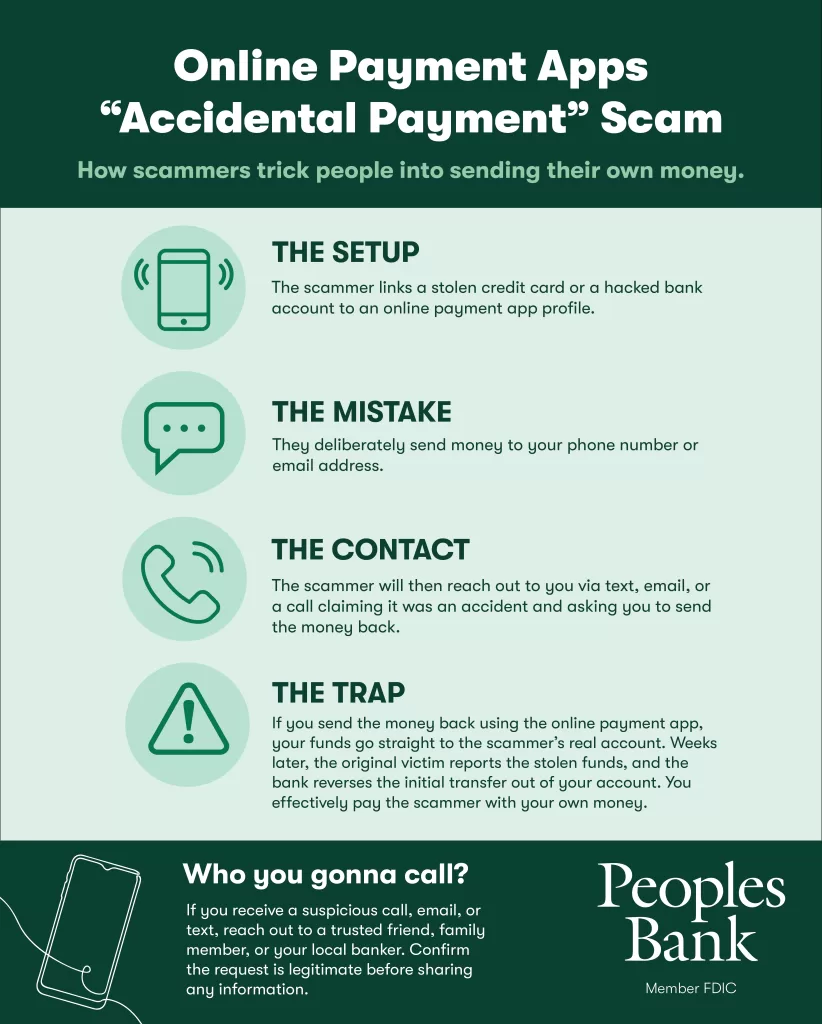
Step 1: The Setup
A scammer gains access to a stolen credit card or compromised bank account and links it to an online payment app.
Using those stolen funds, the scammer sends money to an unsuspecting recipient, often via a phone number or email address linked to the payment app.
Step 2: The “Accidental” Payment
Shortly after the money arrives, the recipient receives a text message, email, or phone call.
The sender claims the payment was a mistake and politely asks for the money to be returned.
Because the request appears reasonable and the funds seem to be sitting in the recipient’s account, many people believe they are simply helping someone correct an error.
Step 3: The Trap
If the recipient sends the money back through the payment app, the funds go directly to the scammer’s real account.
Later, the true owner of the stolen credit card or bank account discovers the fraud and reports it. Once the financial institution investigates, the original payment is reversed.
At that point:
- The fraudulent payment is removed from the recipient’s account.
- The money the recipient voluntarily sent back to the scammer is gone.
- The recipient may be left covering the loss.
In other words, the victim unknowingly pays the scammer with their own money.
Warning Signs to Watch For
Be cautious if:
- You receive money from someone you don’t know.
- A stranger urgently asks you to return funds.
- The sender pressures you to act quickly.
- The sender contacts you through multiple methods, such as text, email, and phone calls.
- The story seems designed to make you feel guilty or responsible for fixing the problem.
Scammers often rely on urgency and politeness to lower your guard.
What Should You Do Instead?
If you receive an unexpected payment, don’t send the money back. Even if the request seems legitimate, avoid sending a new payment to the person who contacted you.
Contact Your Payment App
Report the transaction directly through the app’s support channels and ask how to handle the situation safely.
Contact Your Bank
If the payment was linked to your bank account, reach out to your financial institution for guidance. They can help you understand the transaction and discuss any concerns about potential fraud.
Monitor Your Accounts
Keep an eye on your account activity and report any suspicious transactions immediately.
When in Doubt, Ask
Fraudsters count on confusion and quick reactions. Taking a few extra minutes to verify a transaction can help protect your money and your personal information.
If you receive a suspicious call, text, email, or payment request, talk with a trusted friend, family member, or a Peoples Bank representative before taking action.
Because when it comes to fraud prevention, it’s always better to verify first and send later. We’re always here to help, so never hesitate to reach out to us if you suspect something suspicious. Send the graphic below to friends and family to alert them to this increasingly common scam.